
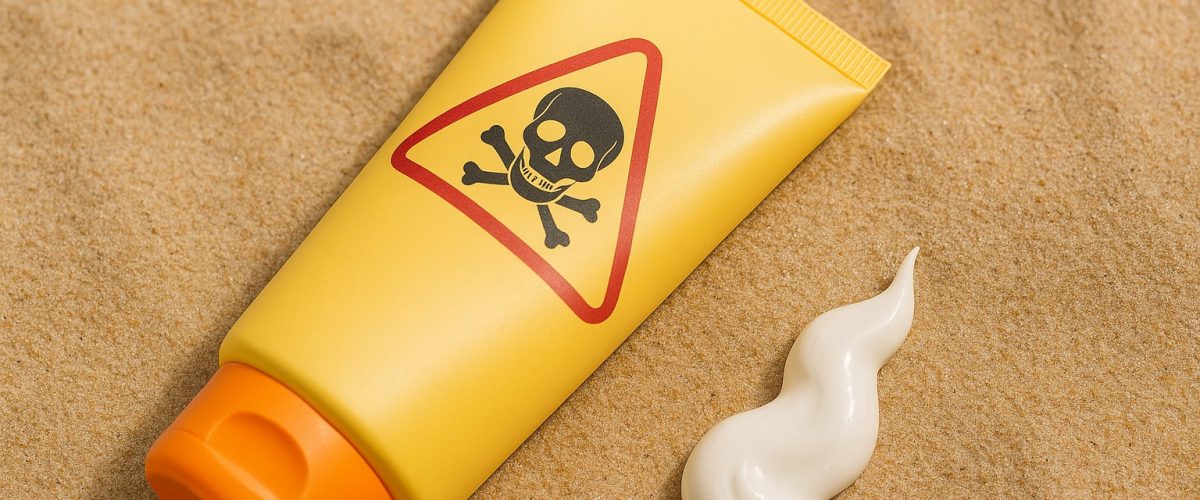
Not all sunscreens are created equal. Here’s what to look out for on the label — and what ingredients dermatologists actually recommend.
Why It Matters
Sunscreen protects you from sunburn, premature aging, and skin cancer — but some formulas contain chemicals that may do more harm than good.
Certain UV-blocking agents have been linked to hormone disruption, skin irritation, and even coral reef damage.
Chemicals to Watch Out For
- Oxybenzone (Benzophenone-3)
A common UV filter that may interfere with hormone balance and cause allergic skin reactions. It’s also been found in ocean water, harming coral reefs. - Octinoxate (Ethylhexyl Methoxycinnamate)
Helps block UVB rays but can disrupt hormones and contribute to coral bleaching. Banned in Hawaii for environmental reasons. - Homosalate
Used to stabilize UV filters but can accumulate in the body and potentially impact hormone regulation. - Octocrylene
Often paired with other chemicals but can form benzophenone, a suspected carcinogen, when it breaks down. - Parabens (Preservatives)
These can mimic estrogen in the body and have been linked to hormone disruption in some studies.
Safer, Dermatologist-Approved Alternatives
Look for “mineral” or “physical” sunscreens that use zinc oxide or titanium dioxide as active ingredients.
They sit on the skin’s surface to reflect UV rays rather than absorbing them — and are considered safe for people and marine life alike.
Bonus Tip: Choose broad-spectrum SPF 30+ and reapply every two hours for full protection.
Mini Takeaway:
The best sunscreen is one that protects you and the planet. Skip the questionable chemicals, choose mineral-based formulas, and wear your protection proudly.