
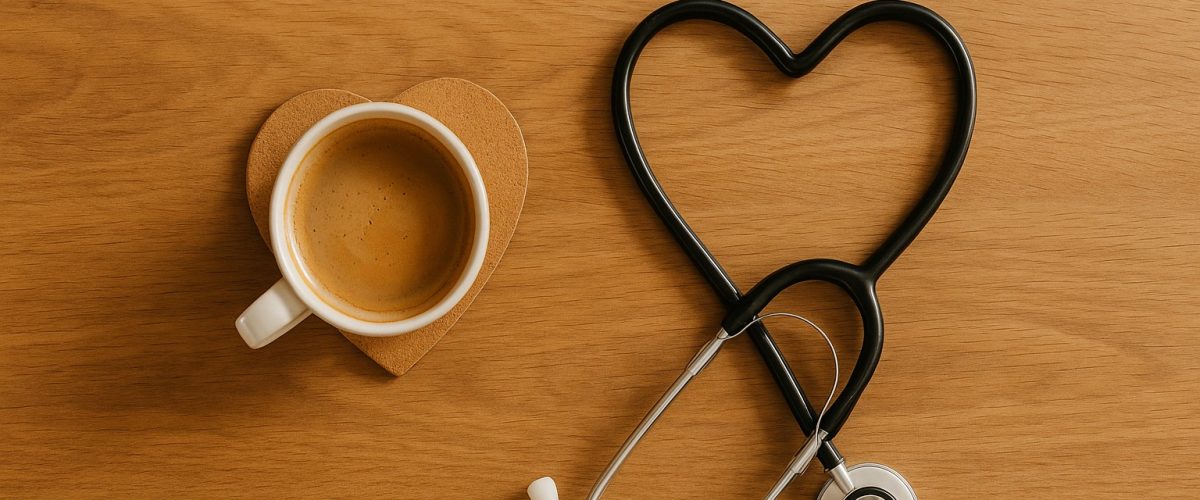
It’s one of the world’s favorite drinks — but is your morning cup helping or hurting your heart?
The Good News
Coffee lovers, relax — the research is on your side (mostly).
Multiple studies, including large-scale reviews from the American Heart Association and Harvard School of Public Health, show that moderate coffee drinkers (2–4 cups a day) actually have a lower risk of heart disease and stroke than non-drinkers.
That’s because coffee is rich in antioxidants, which help reduce inflammation and protect blood vessels.
When Coffee Can Become a Problem
The benefits drop off when you go overboard.
Too much caffeine can:
- Raise blood pressure temporarily
- Trigger anxiety or irregular heartbeat in sensitive individuals
- Interfere with sleep, which in turn affects heart health
And what you add to your coffee matters too — heavy sugar, flavored syrups, or high-fat creamers can outweigh coffee’s benefits.
What “Healthy Coffee Habits” Look Like
- Stick to 2–4 cups daily. That’s the sweet spot for most adults.
- Drink it black or lightly sweetened. Skip the sugar bombs.
- Avoid caffeine 6 hours before bed. Rest is heart protection, too.
- Hydrate alongside it. Coffee’s mild diuretic effect can deplete fluids.
The Bottom Line
No — coffee doesn’t kill your heart.
In fact, enjoyed in moderation, it might help it. Just keep your cup simple, skip the excess sugar, and listen to your body.
Mini Takeaway:
The truth? Coffee isn’t the villain — balance is. A few cups a day can be part of a heart-healthy lifestyle (and a happier morning).